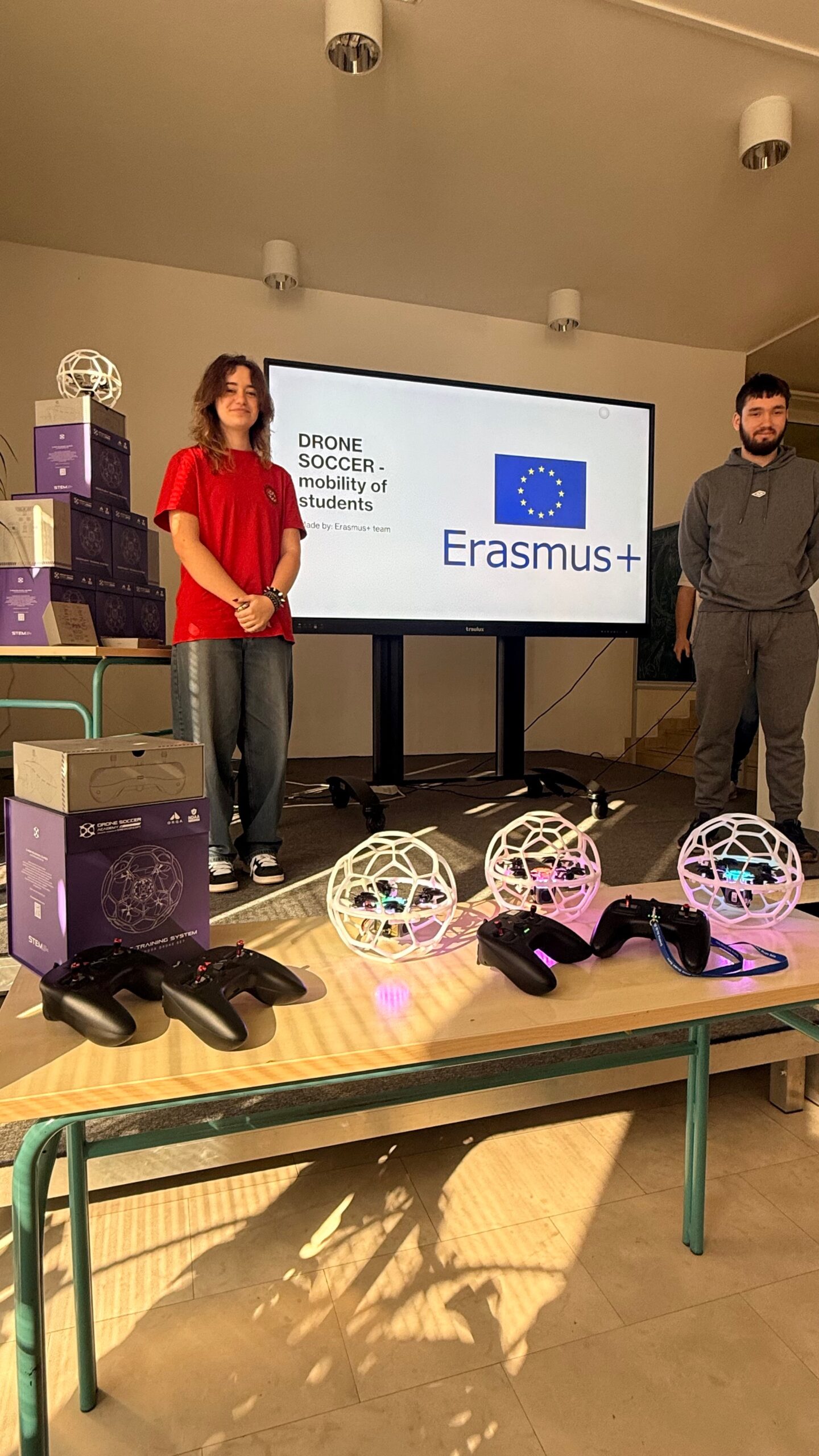
On Friday 06/03/2026, the activities of the final day took place at the Dugo Selo School. The students were divided into two main groups in order to participate in two different activities. The first group attended a presentation about a project called Drone Soccer. The presentation was given by Lucija and Karlo, two Croatian students, together with their teacher. They explained that this Erasmus project involves partners from several European countries, including Croatia, Norway, Spain and Romania. The idea is inspired by the famous flying ball game Quidditch from the Harry Potter universe. The drones are placed inside protective spherical frames and are used in a competitive game similar to football. The students first received an explanation about how the drones function in real life, including details about their battery life (around 10 minutes) and the duration of each match (approximately 3 minutes). Lucija and Karlo then demonstrated how the drones work. Afterwards, the students had the opportunity to ask questions and learn more about the project.
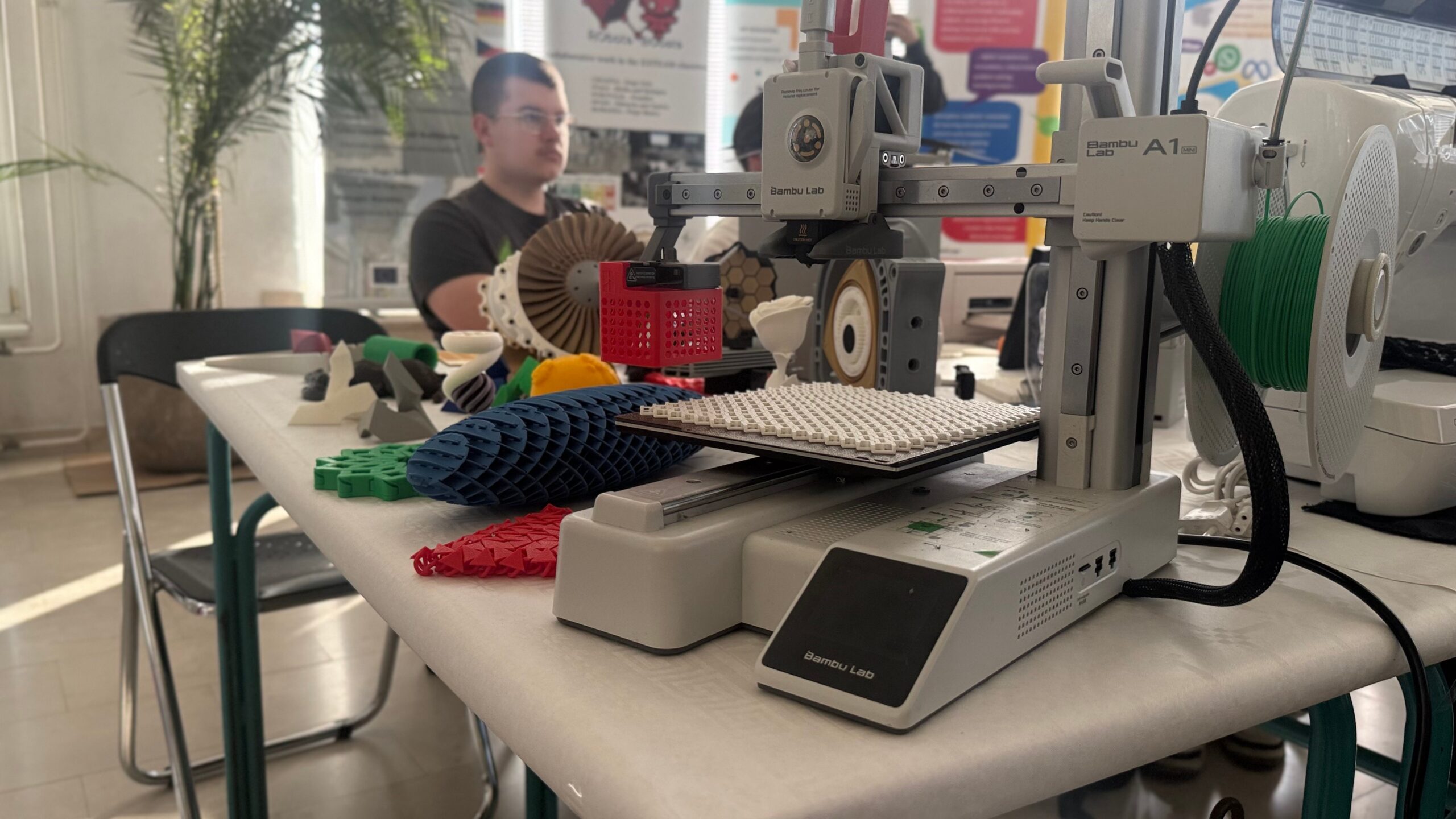
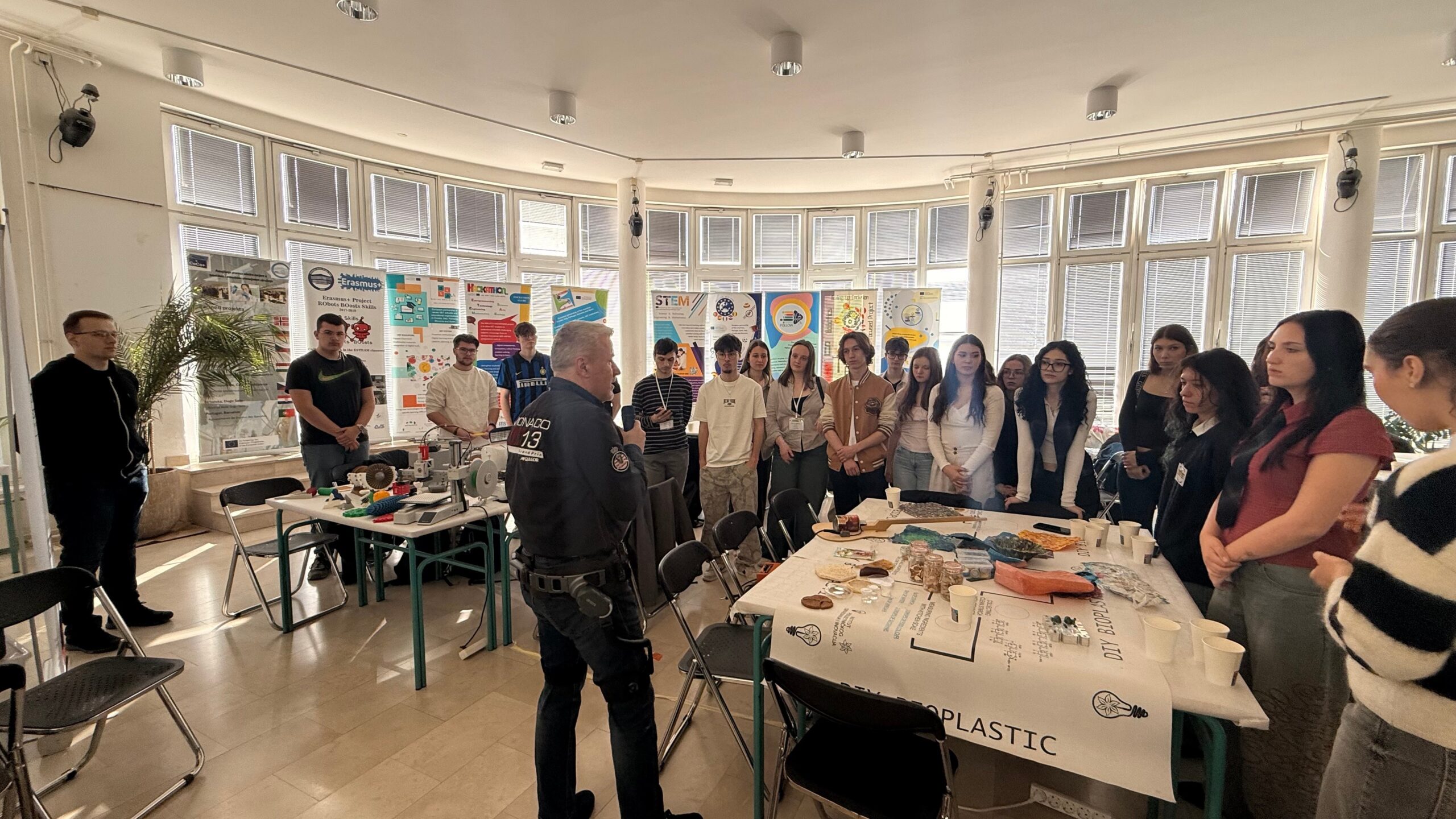
During the same session, representatives from FabLab City also presented some of their activities. They introduced the concept of producing locally many of the objects we use in everyday life. The students were able to discover several machines used in the lab, such as 3D printers, laser cutters and sewing machines.
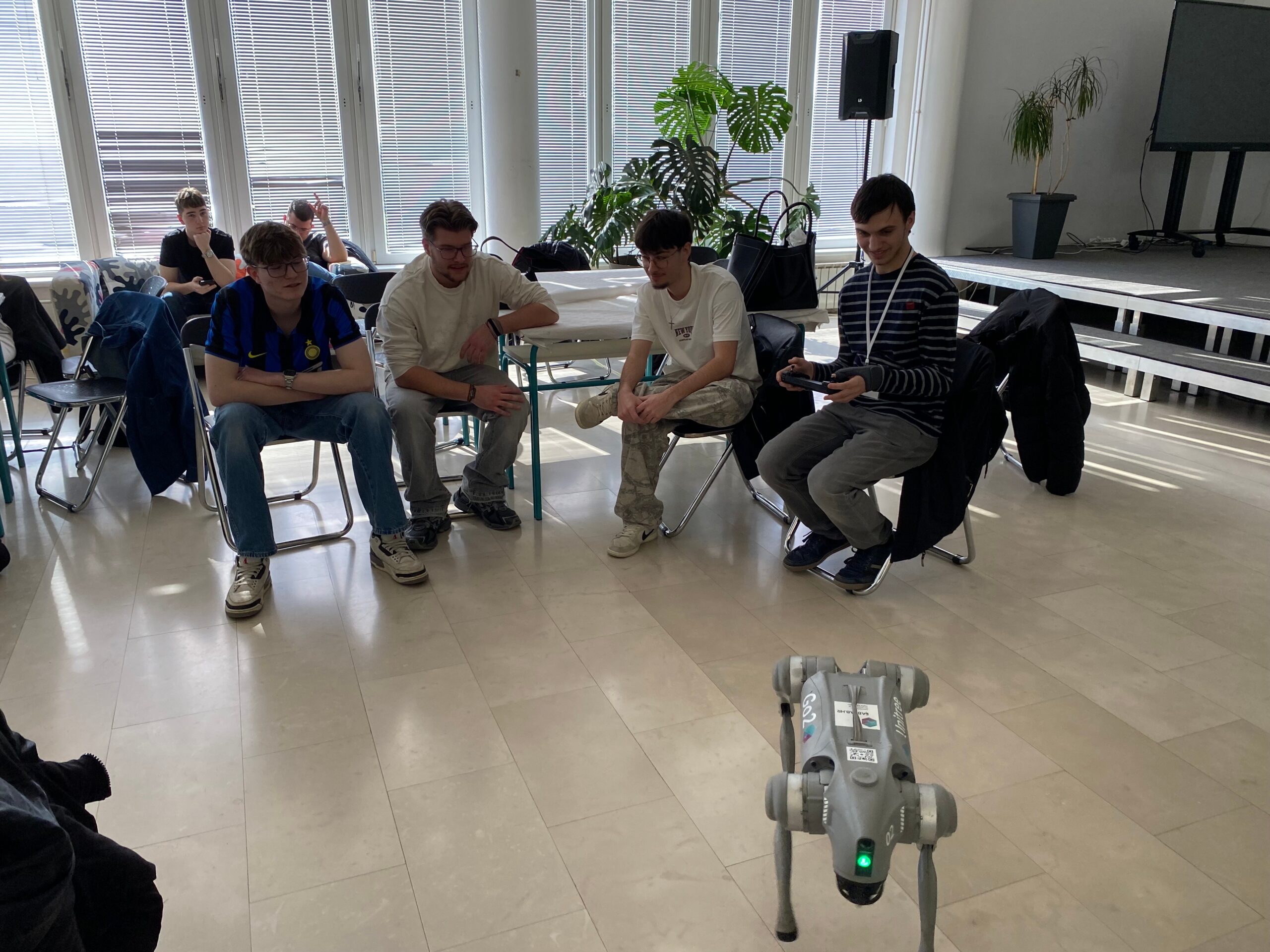
One particularly impressive demonstration involved a robotic dog, which students could control using a joystick. This interactive activity attracted a lot of attention and curiosity from the participants. The FabLab team also presented their work on bioplastics, which are being developed as an alternative material in order to reduce pollution and promote more sustainable production.
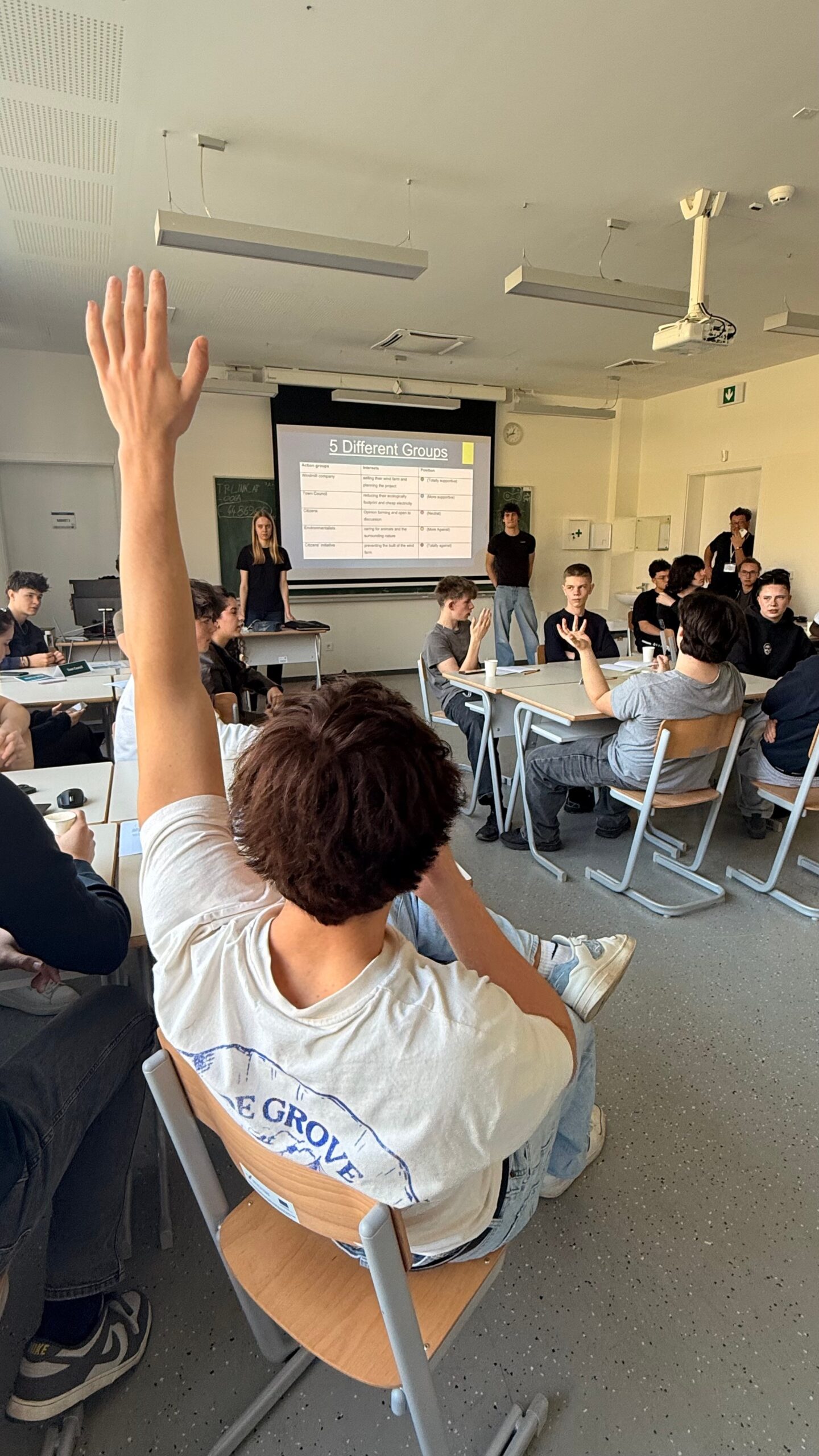
Meanwhile, the second group participated in a workshop prepared by the German students. During this activity, the participants took part in a role-play discussion about the possible construction of a wind park. The students were divided into five different action groups representing different stakeholders: a windmill company, the town council, local citizens, environmentalists and a citizens’ initiative. Each group had to discuss the potential advantages and disadvantages of building the wind park from their specific perspective. Afterwards, the groups presented their arguments and engaged in a debate in order to try to reach a common decision. The activity encouraged students to think critically, express their opinions and understand different points of view.
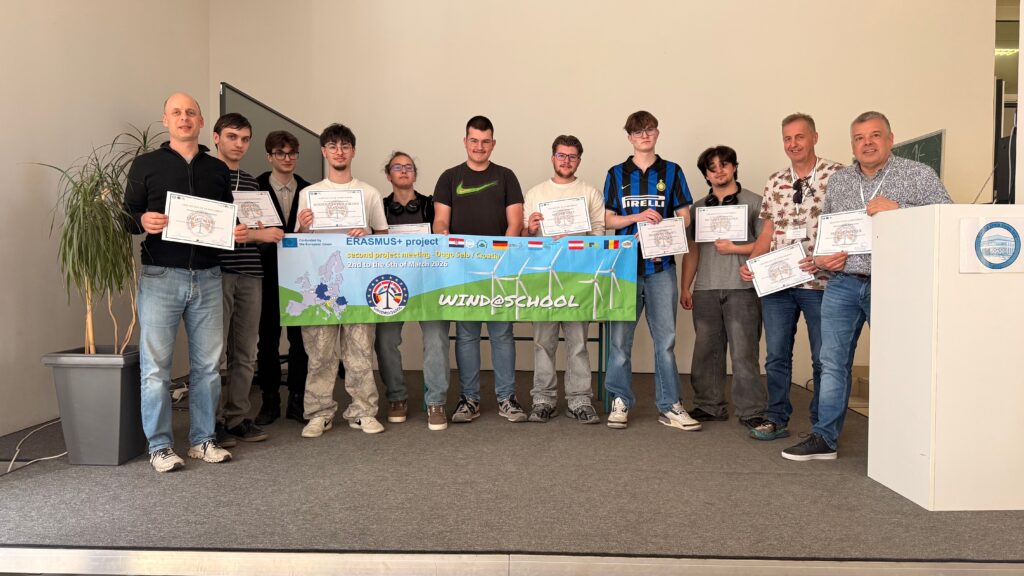
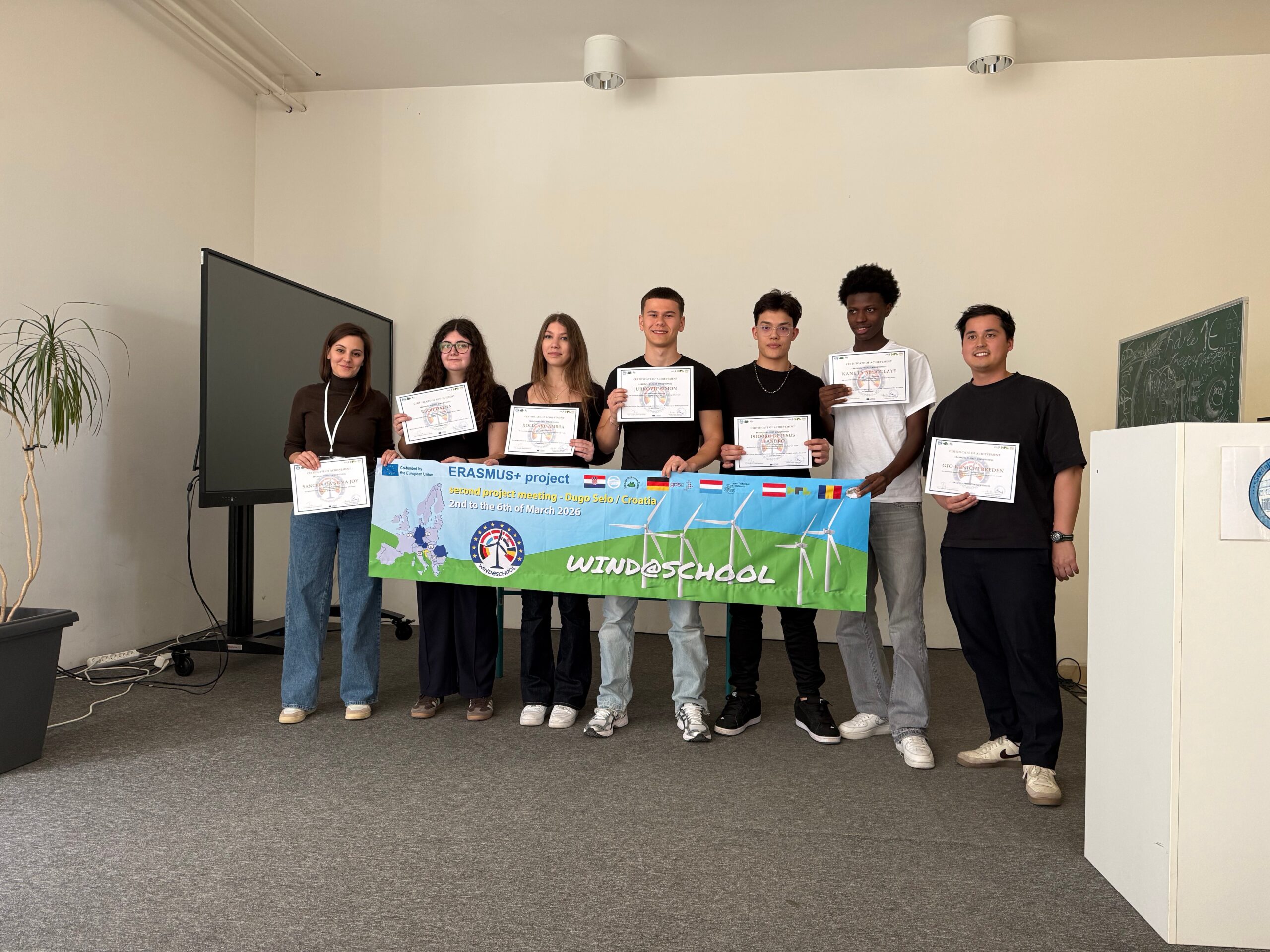
In the afternoon, all participants gathered for a small closing ceremony. Both students and teachers received a certificate of achievement confirming their successful participation in the Erasmus+ project in Croatia from 2nd to 6th March 2026.
After a short farewell ceremony and the completion of all activities, the students returned to Zagreb, marking the end of a very enriching and memorable Erasmus week.
This website uses cookies to improve your experience. We'll assume you accept this policy as long as you are using this websiteAcceptView Policy